What The Ancient Romans Can Teach Us About Building Wealth
Notre Dame Classics Professor Luca Grillo presents financial advice from such thinkers as Cato the Elder.

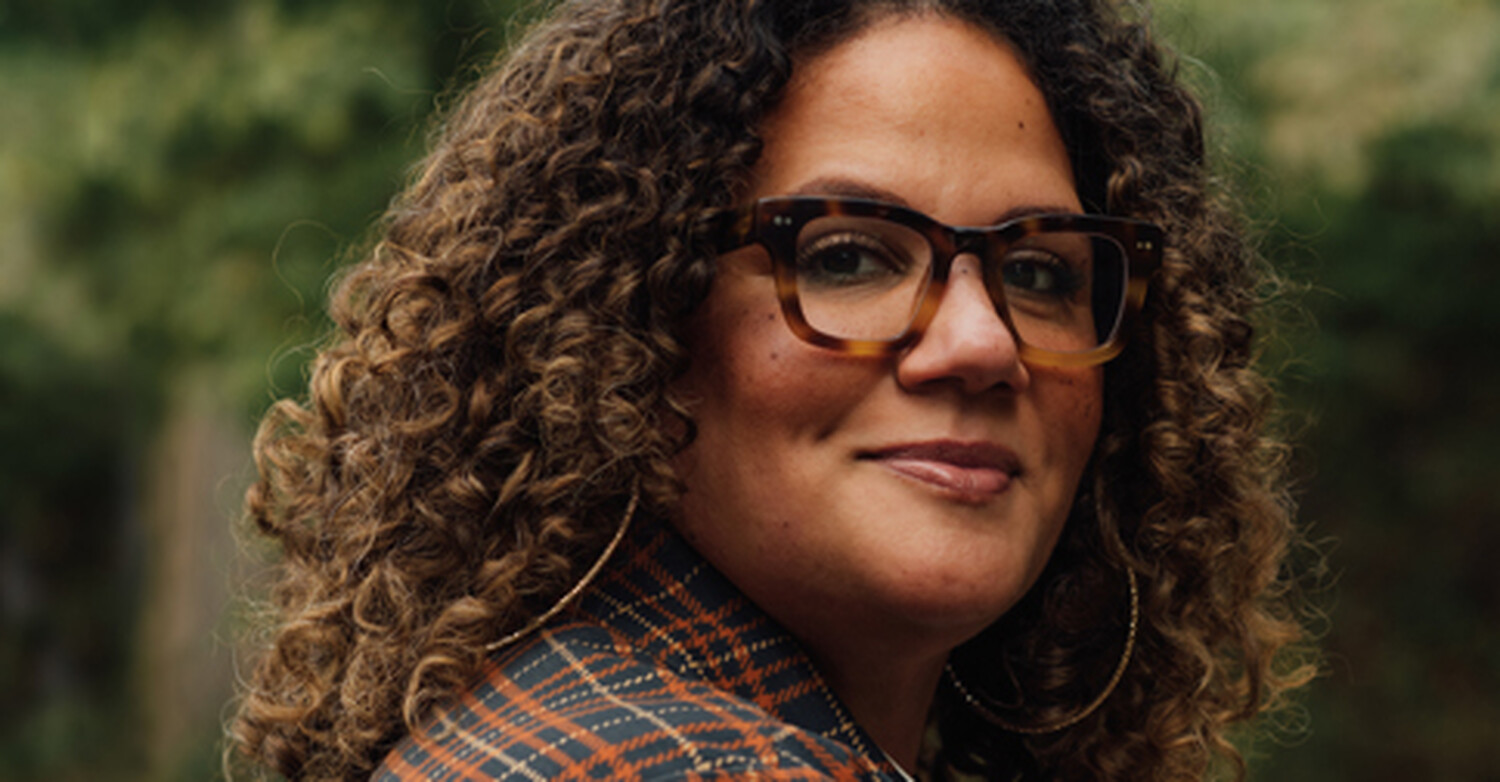
When Luca Grillo (M.A. ’03) talks, Wall Street listens.
Grillo wrote his new book How to Make Money: An Ancient Guide to Wealth Management with airport business travelers in mind. His pocket-sized work excerpts Roman luminaries such as Pliny, Suetonius, and Cato the Elder; it took flight after catching the attention of The Wall Street Journal, whose review praised his “thoughtful selections and lucid translations.”
Grillo chairs Notre Dame’s classics department, and his book made such a splash that a Manhattan investment firm invited him to give a speech to its corporate clients. “If you want to know how to make money, don’t read my book, because it should be me asking you,” Grillo kidded his financial audience.
His guide is the latest in a Princeton University Press series subtitled Ancient Wisdom for Modern Readers. Its ingenious concept includes volumes like How to Be Healthy by the physician Galen and How to Tell a Joke by Cicero. The original Latin appears adjacent to translations.
Grillo doesn’t claim to have unearthed modern-day retirement investment tips while translating the book’s text: The Roman Empire had no stock market, though Romans had a legal mindset and formed corporations. Most people’s lives were “quite unstable and hard,” Grillo says. “The biggest fear for a father was that if he died, he would literally leave his wife and children with no food.” As a result, shopkeepers teamed with larger businesses that gave them benefits, one of which was a sort of life insurance.
Grillo’s previous books focused on more traditional subjects like Julius Caesar and Cicero. Learning about Roman taxation, loans, trade, and contracts enriched his understanding of the Roman Republic. “There are so many striking parallels with our own society—the dynamics of power distribution, the struggles, the cynicism,” says Grillo, whose next book explores the concept of irony in Latin literature.
Agriculture dominated Rome’s economy; elites professed to hold farming in higher esteem than any other profession. The truth, according to Grillo, is that it was a “respectable facade” for the empire’s superrich who hired former slaves to manage their estates.
Emperors and prominent generals “invested” in elaborate gladiatorial events that lasted months. They did so not to make money, but to control the poor. “Plutarch reports that people were stunned at how much Julius Caesar spent on games but he says it was a bargain,” Grillo says. “Rather than trying to address the problem of poverty and starvation, he bought the masses, in a way, with cheap means.”
Hated tax collectors gouged everyone, thanks to Rome’s “terrible” method of revenue collection. Provinces farmed out the task to the highest bidders. “The state turned a blind eye to people who could be ruthless,” he says.
Sound principles of economic management eluded emperors, sometimes leading to crises. “When there was inflation, they often tried to address it without any data. They had no way to understand the market and sometimes made things worse.”
Grillo began his odyssey into the ancient world fittingly enough in his hometown of Milan, which is Italy’s financial center and home to the Borsa Italiana, the country’s stock exchange.
His intellectual horizons opened at age 14 when he read Homer’s Odyssey in Italian. “‘Wow, if I continue,’ Grillo remembers thinking, ‘I’ll be able to read this in Greek.’” Today sometimes at night before going to sleep he reads the epic in its original language.
“I often tell my students [that] studying Greek and Latin is like establishing a conversation with your great grandfather,” says Grillo. “It’s a way to rediscover where you came from by learning about the roots of our world today and how things have evolved.”
Notre Dame’s classics department has 100 under- graduate majors. Though it has no Ph.D. program, Grillo says its master’s program ranks as one the nation’s best.
Grillo and his students have spread the bonum verbum (good word) to local elementary schools thanks to Aequora, a curriculum from the nonprofit educational group Paideia that introduces children to Latin and Roman history and mythology. “We don’t have to do much preparation,” says Grillo. “We show up and do it.”
George Spencer studied Latin for five years. His book When Memory Fades: What to Expect at Every Stage, from Early Signs to Full Support for Alzheimer’s and Dementia, cowritten with a geriatrician, will be published by St. Martin’s in June.
If you liked this story, Minnesota Alumni magazine publishes four times a year highlighting U of M alumni and University activities. Early access to stories and a print subscription are benefits of being an Alumni Association member. Join here to receive a printed copy at home.