The Invisible Man
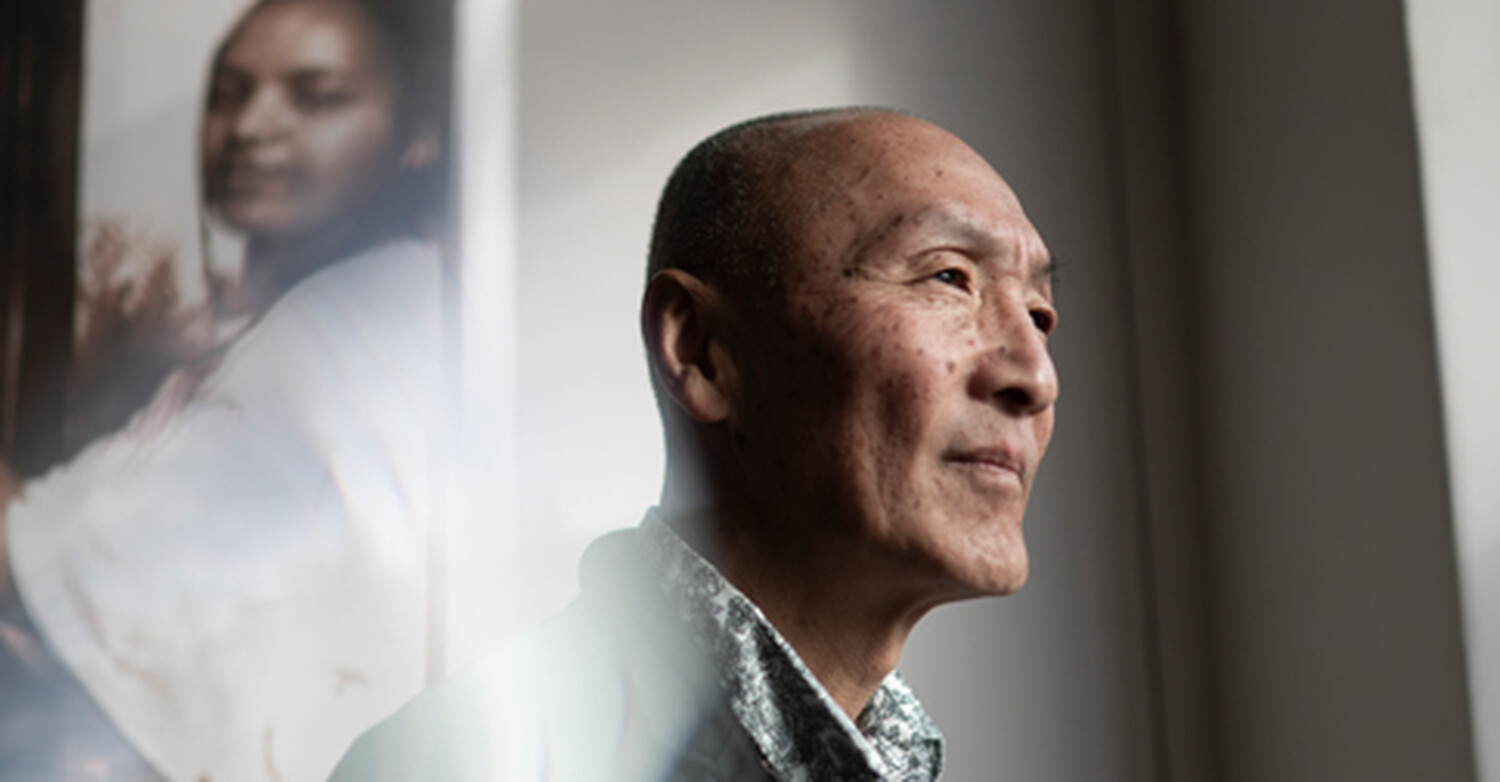
Mark Siegel is one of Minnesota’s top health-care thinkers. But some people look right through him.

Mark Siegel (J.D. ’98) knew he wanted to practice law since he was 11. It appealed to his analytical nature. He certainly had the grades for it; he just didn’t know what kind of law he wanted to pursue. Then he had Susan Wolf as a professor at the University of Minnesota Law School.
“She taught health law and bioethics, and I had her for both classes,” he says. “She was a major influence on me. Health law is what I do now. I don’t know what direction I would have taken if I hadn’t had her as a professor.”
Siegel has spent the past 24 years at the Minnesota Department of Human Services, serving in a variety of roles. Today he’s a liaison between DHS and the federal agency that oversees it, the Centers for Medicare and Medicaid Services. He’s one of the legal minds in St. Paul assessing implementation concerns. Health law is personal to Siegel.
Living inside his head
Siegel was born with spinal muscular atrophy (SMA), a genetic condition that weakens and ultimately destroyed the nerves that control voluntary movement. Unlike those with spinal injuries, he does experience normal physical sensations. And for a while he did have some control of his limbs; he could hold a pencil when he was a child. But today Siegel’s range of motion is mostly limited to wiggling his thumbs and toes.
He rarely eats food since chewing is difficult. Instead, he ingests liquid meals directly into his stomach through a gastrostomy tube. “I enjoy eating, but this is just easier,” he says.
Siegel uses assistive technology to control his computer with his eyes. “Most of my interaction with the world occurs via my head ... you could probably cut it off and put it in a jar à la ‘Futurama’ and I would still have a productive life,” he says with a laugh.
Growing up in Green Bay
Siegel is the oldest of three children. He is the only one with a disability.
He didn’t spend his childhood playing shortstop or building treehouses; Siegel spent a lot of time in the hospital. But intellectually, he thrived. He spent much of his free time writing short stories and breezed through high school. “I was sick a lot and missed plenty of days, but I did OK in class,” he says.
He enrolled at St. Norbert College, where his mother taught German, just outside his hometown of Green Bay. He graduated with a 3.88 GPA, earning a bachelor’s degree in political science and English. After that, the law beckoned. “I saw lawyers as people who like to debate, like to use words, and that appealed to me,” Siegel says.
So he headed to the University of Minnesota Law School. And like most first-year students, he went through a bit of a Paper Chase adjustment. “Law school was a shock at first ... suddenly you’re surrounded by people who are just as bright, if not more so, as you are,” Siegel says. But, as always, he adapted and thrived. And he welcomed a greater range of experiences than the ones he encountered growing up.
“I was such a sheltered kid,” he says. “I didn’t have a lot of exposure to different people and different beliefs. When I moved to Minneapolis, I suddenly was meeting people from all over the world. It was a real eye-opener for me.”
After graduation, his career unfolded quietly and methodically, just the way he wanted. Except for the time he was the subject of a state Supreme Court case.
All disabled clerks out of the courtroom
Siegel clerked for a Hennepin County District Court judge. Once a few adjustments were made—a desk was put on the floor of the courtroom so he wouldn’t have to navigate stairs (clerks typically sit on a raised platform just below the judge’s bench), an automatic door opener was added, and a few computer programs were installed—Siegel was able to perform all his clerking duties. But there was one complication when it came time for him to staff a jury trial by himself for the first time.
“I was clerking during a personal-injury case. The plaintiff had been run over by a school bus, and early in the trial, his attorney makes a motion to have me removed from the courtroom. His concern was the jury would see me, a disabled person with a job, and would be less sympathetic to his client, who he is arguing is too injured to work,” Siegel recalls. “Well, the judge lets me stay. The plaintiff ends up losing and his lawyer makes a motion asking for a new trial, again saying I should have been removed from the courtroom. The judge gets ticked. He writes a letter of complaint to the Lawyers Professional Responsibility Board that ends up being appealed all the way to the state Supreme Court.”
The case made Siegel a bit of a cause célèbre. The legal community polarized into those who rallied around him as a martyr of workplace inequality, and those who felt the judge had overstepped his bounds in seeking public reproach against the lawyer.
Tim Maher, who was the judge’s other clerk, remembers that the coolest head during the imbroglio was Siegel’s.
“I think he had dealt with similar things and this was just more of the same. He didn’t let it faze him,” Maher says. “What was kind of funny was when Mark got to the hearing at the Supreme Court courtroom in the Capitol building, he couldn’t enter because at the time it wasn’t accessible [he had to set up one of his own ramps to get in]. Accessibility is something Mark takes seriously, but I think he enjoyed the irony.”
The Supreme Court ultimately decided that while the lawyer’s actions were worthy of admonishment, they were isolated and of a nonserious nature. In other words, the lawyer was reprimanded, but not as severely as the judge would have liked.
To this day Siegel is unruffled about the affair, but not indifferent. “Disability discrimination is still not considered as serious as racial or gender discrimination, which is unfortunate,” he says.
Flame
by mark seigel
Looking at me,
I’m not much.
The body that curves
and twists like a slow river.
The voice indistinct and muted,
barely heard at a dinner party.
The plastic tube disappearing into
the hollow of my neck.
I’m the All-American Superhero.
I’m the Invisible Man.
I’m the Circus Freak.
I’m like a forgotten flame,
burning quietly in someone’s hearth.
At times, I’m little more than an
ember lying among the ashes.
And I need the breath of
another to give me life.
Other times, I’m a forest fire,
powerful and cunning and fast,
scorching the earth while old men
sleep in distant watchtowers.
For now, I’m content to sit on the end
of your candle, flickering in the night
breeze and casting a ribbon of shadow
across your sleeping face.
And I’ll still be burning when you rise
with the sun, the light coming through
the window and streaming through
your hair.
Not an inspiration
“There are two things he doesn’t like,” says Maher. “He doesn’t like to be called a role model, and he doesn’t like to be called an inspiration.”
What is he if not the image in someone else’s mind of a man in a wheelchair? Strip away all the kudos and the legal battles and what is left? It’s a question he ponders and addresses in a poem he posted on the 19th Floor, his blog.
If you liked this story, Minnesota Alumni magazine publishes four times a year highlighting U of M alumni and University activities. Early access to stories and a print subscription are benefits of being an Alumni Association member. Join here to receive a printed copy at home.