Rising Alumni
Meet five winners of emerging alumni awards who are achieving great things in their careers. Remember their names. You will be hearing more from them.
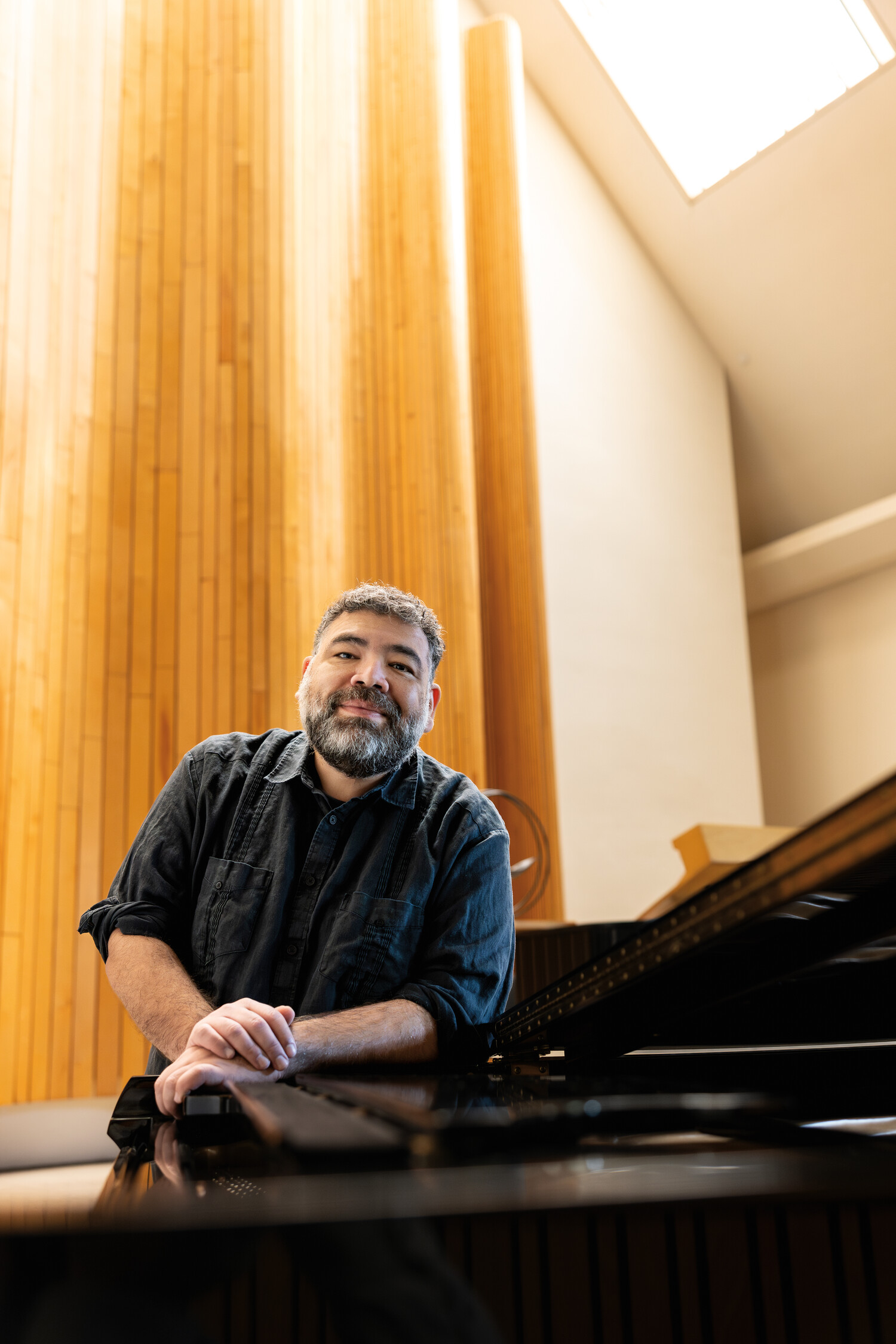
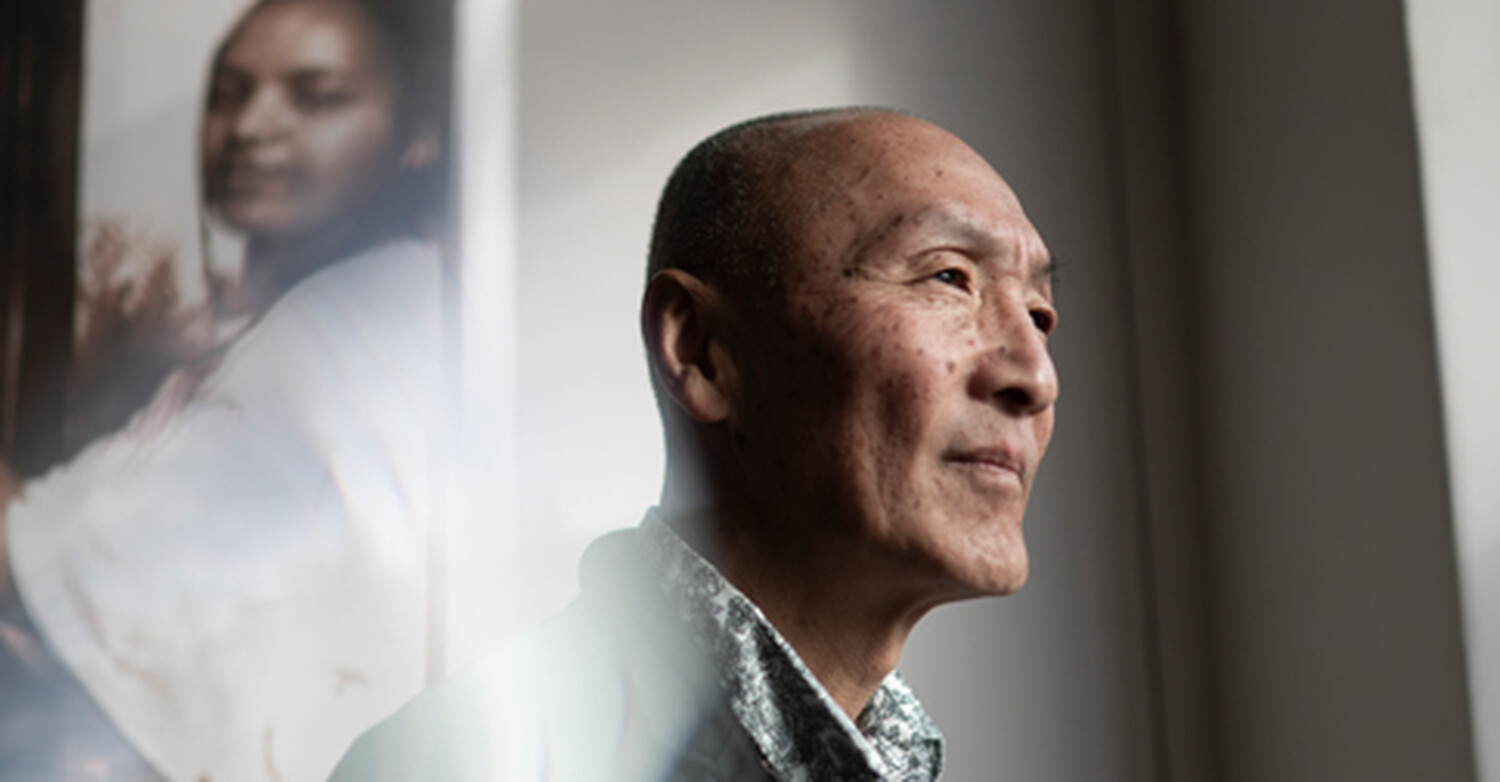
Ahmad Anzaldúa: Music as an instrument for social change
When Ahmed Anzaldúa (D.M.A. ’19) arrived in Minnesota in 2016 to further his music education at the University of Minnesota, he went looking for ensembles that played Latin American choral music. He didn’t find any. So he started one: Border CrosSing.
“I founded it when I was in the doctorate program, with the support of Dr. Kathy Romey in the School of Music,” he says. “When we started it was just me and a few friends putting on concerts, with the hope of attracting more diverse audiences. It’s grown to become a large nonprofit with a full-time staff, a professional ensemble, and a community chorus. We publish music. We record. We go out to schools. We’re pretty active.”
In 2024, Anzaldúa received the Emerging Alumni Award from the College of Liberal Arts. His work with Border CrosSing alone would merit recognition. But that’s not the only thing he does. He’s also the director of music ministries at Unity Church and coeditor of the Justice Choir Songbook.
Anzaldúa grew up in northern Mexico in the only Muslim household for hundreds of miles. He learned trumpet and piano at a young age. His aunt, Gloria Anzaldúa, was a pioneering scholar in Chicana feminism. He went to medical school for a year but shifted to music after he won a piano competition. Anzaldúa earned a master’s in choral conducting at Western Michigan University.
Then he moved to Minnesota. “I knew Minneapolis was a hotbed of choral music,” he said. What he found at the University of Minnesota when he arrived was something unique in music higher education.
“In a lot of programs, the choir-conducting professors tend to make advancing their own careers the priority,” he says. “But Kathy was different. Her priority was to create good conductors.”
He not only jibed with the University, but the state. “The support for the arts here makes all my work possible,” Anzaldúa says.
Justice Choir remains close to his heart. The choir makes itself available to perform at vigils and protests. There are 15 chapters around the country. Composers submit songs and Anzaldúa helps publish them.
If he sounds busy, between conducting and performing as a classical pianist, it’s because he is. He wouldn’t have it any other way.
“I am in a highly improbable career, and I’m immensely grateful,” he says.
Anzaldúa has a busy winter on tap, with St. Paul Chamber Orchestra concerts and Border CrosSing events. He presses forward during times that can be turbulent with the belief that music can be healing.
“I came to this country with great hope for the future,” he says. “I still hold that hope.”
He says he’ll continue to strive to make music and advance justice wherever he goes.
“I will always be thankful for the many people and organizations that made my studies possible, and I make it a point to pay it forward at every opportunity.”

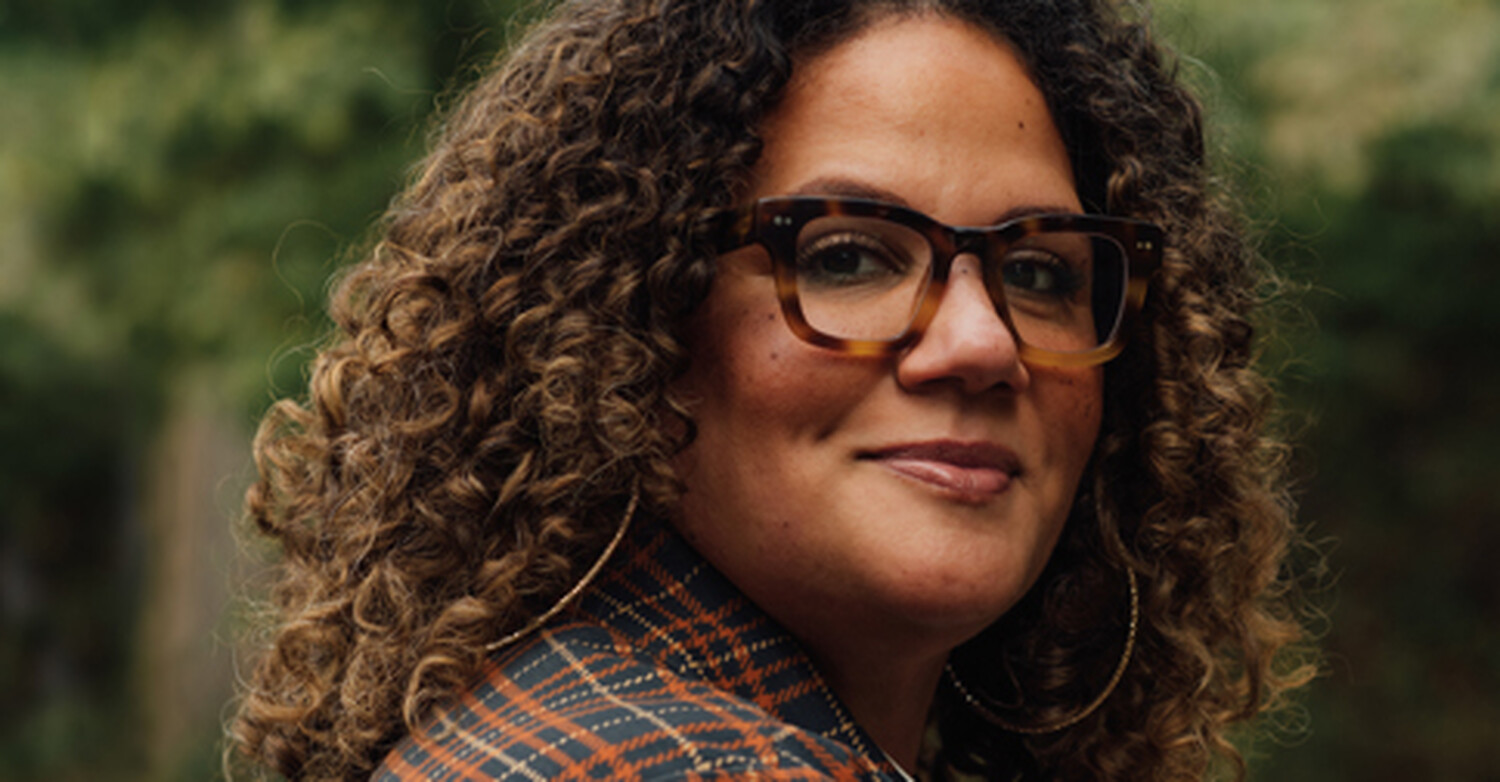
Katie Heinemann: Accelerating aerospace breakthroughs
When one grows up in Oshkosh, home of EAA AirVentureOshkosh, one of the world’s largest aviation shows, an interest in aerospace is likely to develop. It certainly did for Katie Heinemann (B.A.E.M. ’15).
“For my 8th birthday my parents arranged a flight for me and my friends in a small airplane through the Young Eagles program,” she says. “I’ve been hooked on aerospace ever since.”
Today she’s an aerospace engineer working in software with a public health focus. Heinemann serves as a senior software engineer at Violet Labs and a human performance data and software engineer for NASA. And she’s a recipient of the 2024 On The Rise Alumni Leader Award from the University of Minnesota.
Heinemann thrived as an aerospace engineering premed student. She’s long been grateful for a decision made by Professor Emeritus Tom Shield, her advisor: “He allowed me to count high-level biology coursework toward my technical elective requirements,” she says.
She also has fond memories of Professor Victor Barocas in the biomedical engineering department. “He was nice enough to let me in his lab,” she says. “We did a lot of research on tissue-stress strain. He ended up writing a letter of recommendation for me when I applied for an internship at NASA and I got it.”
Heinemann considers herself a human performance engineer. “I love finding connections between space fight, intelligence software, and human health,” she says.
She has done much in her still-young career. She has commissioned water treatment plants for GE Power. She’s worked as a full-stack software engineer at a tech startup in Minneapolis. And she’s served as a human performance engineer at the Johnson Space Center.
Heinemann has made it one of her professional missions to eradicate data silos in the aerospace field.
“There are a lot of folks with files locally on their computers, and that data can be difficult to access,” she said. “My job to make the data available to folks within the research labs. Violet Labs is an aerospace company whose whole goal is to abolish data silos. I’m doing pretty much the exact thing at NASA. I get data from different manufacturing platforms into software that is accessible to researchers.”
She describes similarities between health care and aerospace in how they safeguard their data processes. “If you’ve read The Checklist Manifesto, it’s like that,” she says. “In the aerospace field, there are checklists for airplane takeoffs to make sure everything is 100 percent safe. Folks are doing that in the medical field now, before surgeries. There’s a lot of care toward data and actual operations. I find this exciting. The goal is to help accelerate breakthroughs and reduce the burden of tedious tasks.”
Heinemann also dreams of becoming an astronaut.
“I just got my rejection letter, along with 8,000 other people, but that’s OK. NASA only selected 10 candidates this year,” she says. “I’ll keep trying.”
Heinemann maintains strong ties with the University through the College of Science and Engineering Mentorship Program and the Tom Burnett Leadership Program. Her efforts have helped students get involved in research opportunities, secure internships, and earn full-time positions, including at NASA.
“I’m extremely proud to be an alumna,” she says. “The mission to provide a world-class education, advance groundbreaking research, and engage in community-focused outreach resonates deeply with me. We are all stronger together.”

Nick Schuler: Returning people to themselves
Nick Schuler (D.N.P. ’25) comes from a long line of nurses. His mother, sisters, and grandparents all served. He understands in his bones the fundamental truth that practitioners confront when giving care: Patients are terrified.
“For us, an illness may be something we see every day, but to a patient it might be completely new, and scary,” he says. “You want to support people no matter where they are in their health care journey.”
Since Schuler graduated from the University in 2018, he’s served as a staff member and charge nurse in fast-paced intensive care units at the University of Minnesota Medical Center (UMMC) and University of Minnesota Masonic Children’s Hospital. He assumed the role of pediatric lead in the UMMC Special Pathogens Unit.
Last year Schuler was awarded the Rising Star Award from the School of Nursing. He recently completed his Doctorate in Nursing Practice and will soon be returning to the University as an anesthesia-services specialist at UMMC on the East Bank.
“You build trust with patients in the 20 minutes prior to a procedure,” he says. “Patients need to have faith that you’ll give the best care to them and wake them up at the end so they get back to what makes them them.”
Schuler has found a fit specializing in anesthesia. “It’s a fun mix of physiology and the sciences and pharmacology,” he says. “It’s a path I’m glad I’m on.”
He intends to help other students find the right path for them by adding teaching to his work life. “I hope to get reconnected back with academia and get involved in teaching,” he says. “I want to build my own experience and repertoire and offer my guidance. A great part of nursing is there’s still a preceptorship apprentice style to it,” Schuler continues.
“When I started, a lot of nurses shared their knowledge with me. I’ve been training new nurses and that’s such a cool role ... I hope down the line that will be part of my career.”

Lekie Dwanyen: Researching global mental health
Lekie Dwanyen (P.h.D. ’20) knows exactly the moment her future came into focus.
“It was in 2012 when I did a study abroad with Nate Whittaker while doing my undergraduate work at the U,” she says. “We went to South Africa for a four-week program. We got to volunteer in townships. That sparked my brain to research. It made me curious to understand people’s stories in different regions of the world.”
That program would prove pivotal to Dwanyen.
“It led me to applying for the McNair Scholars Program and that’s when my second light bulb popped, which was to pursue a doctoral degree. I hadn’t thought about graduate school before that.”
Dwanyen has taken that spark from Johannesburg to Minneapolis to East Lansing, where today she’s an assistant professor in the Department of Human Development and Family Studies at Michigan State University.
She studies traumatic stress and relational health in families affected by war and political violence. Dwanyen assesses culturally and contextually relevant strategies to reduce mental health disparities in marginalized communities, including those in the United States.
“A lot of mental health disparities exist in our communities because we’ve been exposed to various historical traumas—like genocide against Native Americans, which have produced intergenerational mental health disparities that still exist today,” she says.
One takeaway from her research is that everyone can play a role in fostering community health. “What we’re seeing is that we don’t actually need high levels of training or high levels of education to help each other cope with difficult situations,” she says. “We can train lay community members in trauma interventions and reduce PTSD in communities.”
Much of Dwanyen’s research involves African refugees, such as HIV-positive mothers in South Africa, Liberian refugees in the U.S., and stakeholders in the national mental health system in Uganda. She loves it when she can animate data with real-life stories.
“I teach my students at Michigan State how to do ethical research with people,” she says. “It’s fun when we get to share not just numbers, but the perspectives of people. We want to listen so we can help develop culturally grounded interventions.”
Equity is an important word to Dwanyen.
“Global mental health just means that we care about everybody,” she says. “We want to find ways to reduce disparities that different communities deal with, such as structural-level things like poverty. We want to reduce exposure to traumas.”

Ethan Dado: Teaching students where food comes from
Ethan Dado (M.S. ’19) likes to tell students at Eden Prairie High School, where he serves as Area Learning Center and Pathways program administrator, that we need the following things every day: water and oxygen; food; and shelter.
Dado received a 2024 Rising Star Award from the College of Food, Agricultural and Natural Resource Sciences (CFANS) at the University of Minnesota. He credits his time at the University with igniting his passion for teaching students how to look at agriculture from a multitude of perspectives.
“Dr. Amy Smith was monumental in setting me up for success,” he says. “She served as a mentor throughout my undergrad and was my academic advisor during my graduate program. She went the extra mile to find opportunities for me, cheer me on, and help me navigate the word of academics and young adulthood.”
He initially set out to become a doctor. But as a freshman he came to the conclusion that while doctors extend lives, teachers save lives. That’s when he shifted his focus to a career in education.
Dado prides himself at meeting students where they are, and he strives to present material that makes learning comfortable. When he taught intro to animal science, he would call it Pets And Paws to get students in the door—and then he would introduce them to the world of animal science.
Agricultural education brings together math, science, social studies, writing, health, physical education, and more, Dado says. And it revolves around something everyone can relate to: food. Dado tells students it’s the answer to the question: Why does this matter?
He’s continuing to probe this question in a doctorate program at Baylor University.
“I’m studying student disengagement and looking at how to better engage students in high school education, specifically students who have enrolled in alternative programs,” he says.
If you liked this story, Minnesota Alumni magazine publishes four times a year highlighting U of M alumni and University activities. Early access to stories and a print subscription are benefits of being an Alumni Association member. Join here to receive a printed copy at home.