The Community Partner
Danielle Mkali supports underrepresented communities through targeted gifts

Removing barriers. Uplifting voices. Building wealth.
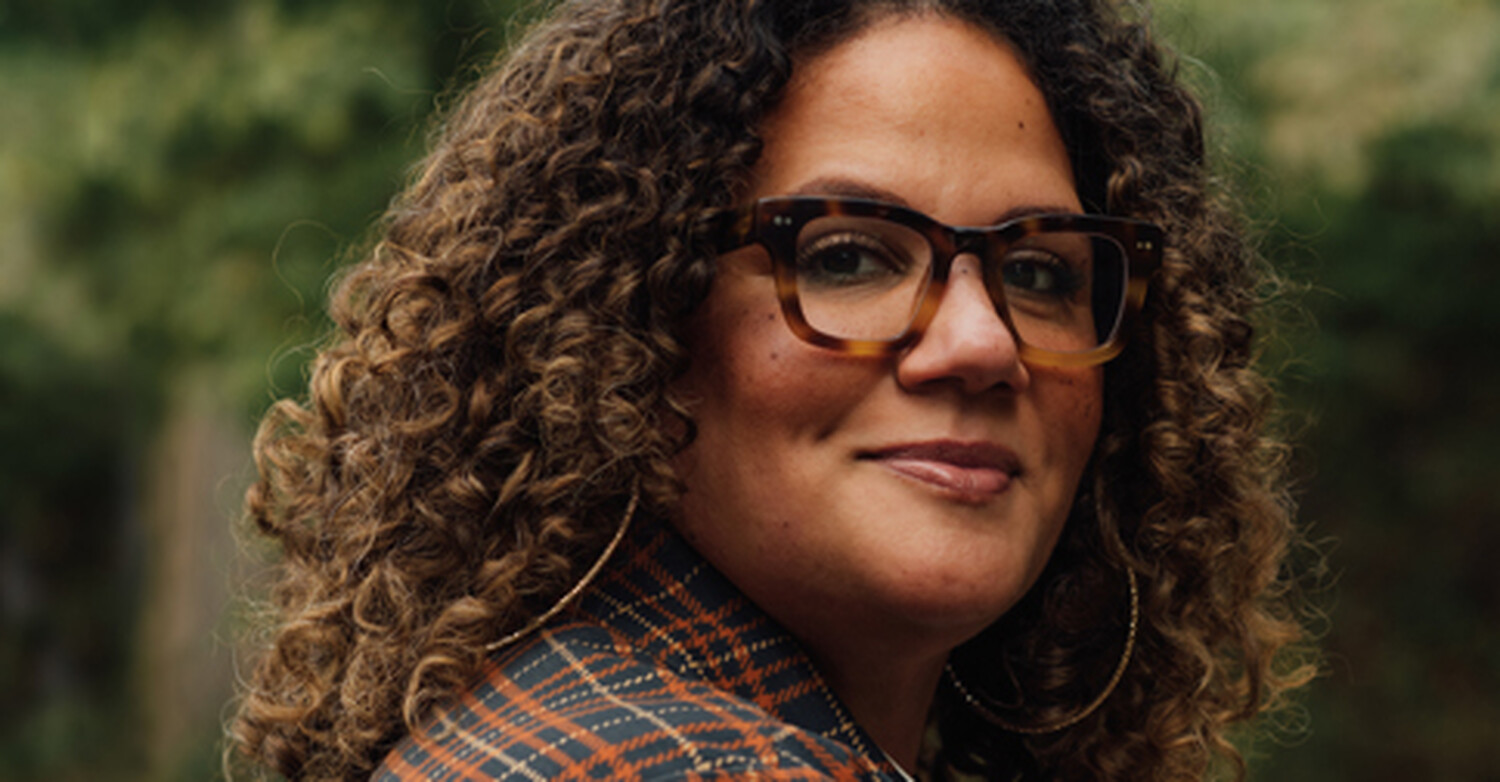
Community organizer Danielle Mkali has dedicated her life to supporting underrepresented communities through these three pursuits. History inspired her.
“Black cooperative economics have been a fundamental part of the Black Freedom Movement from the time of Harriet Tubman,” she says. “Churches collected money to help fund the Underground Railroad. Newly freed African people would coordinate efforts to sponsor a nurse or a doctor coming to their community or to provide dignified burials for people. And from that point on, there’s been these mutual aid societies.”
As vice president of programs and strategies at Nexus Community Partners, Mkali leads a trust she cofounded called the Open Road Fund. Like those earlier community cooperatives, the fund creates wealth-building opportunities designed to address historic and ongoing economic harms to Black Americans by distributing $50,000 direct gifts to individuals in Minnesota, North Dakota, and South Dakota. All recipients identify as descendants of the transatlantic slave trade.
“These are considered Black wealth-building gifts, and the funds go specifically into people’s hands. They’re not re-granted into organizations,” Mkali says. “They can be used to promote financial health, home ownership, housing stability, education, economic ownership, or cultural healing and well-being.”
To date, the effort has provided $10 million in gifts to 300 individuals. Recipients range from the North Minneapolis woman who created a gallery to showcase her family’s Black art collection, to the first-time home buyer in her 60s who established a daycare business out of her South Dakota home, to the 16-year-old boy whose dream is to launch a trucking company with his father.
Prior to joining Nexus in 2013, Mkali directed media justice and community-building efforts across the Twin Cities. Inspired by her passion for equity and love of music, she was an organizer of a national campaign to help found KRSM, a low-power FM radio station based out of the Phillips neighborhood in South Minneapolis. The station amplifies communities whose voices, stories, and cultures are underrepresented in traditional media.
“I think that music is one of the best parts of being a human, and I really love radio. Think about how much fun it is to build a relationship with a personality on the radio who’s choosing music for you. It’s a special thing, and they do it better than Spotify can,” she says.
After graduating from Stillwater High School in 1996, Mkali joined AmeriCorps and performed stream and hiking trail restorations in Juneau, Alaska. A few years later, she enrolled at Minneapolis Community Technical College and was eventually hired by the Center for Democracy and Citizenship (at one time, a center at the Humphrey School of Public Affairs) to introduce youth to organizing. Thanks in part to a tuition benefit, in 2002 she transferred to the University of Minnesota, where she took classes in African American/Black studies through 2006.
“U.S. history is Black history. And even though I think more people should have access to African American/Black studies, I still feel like I was privileged to be able to study it. I got a global history of all different kinds of things,” she says.
Although she has not yet completed a bachelor’s degree, her passion for lifelong learning hasn’t waned. Mkali is pursuing a certificate in leadership coaching, and she has found her way back to campus, guest lecturing in an African American studies class. Her son, Christopher Yorahee, is a sophomore at the University of Minnesota, studying psychology. “Now that my kids are getting into college, maybe I’ll go to class with them and finish with them,” she says.
For more than two decades, Mkali’s work has been guided by the belief that history offers us a key to improving the future.
“Black American contributions to the United States are countless and impossible to be tallied. The style, soul, the music, the agriculture, our political movements, art, architecture . . . I invite all cultures to dig another level deeper. And as you do that, you’ll be inspired to learn so much more.”
If you liked this story, Minnesota Alumni magazine publishes four times a year highlighting U of M alumni and University activities. Early access to stories and a print subscription are benefits of being an Alumni Association member. Join here to receive a printed copy at home.