Food Insecurity is Real
Boynton Health is adding to its food-pantry program to address hunger on campus.

You know the line: A college student says she subsists on nothing but ramen. Everyone chuckles... it’s all just part of the college experience. That’s what students used to hear. But no one’s laughing now—today, too many students would jump at the chance for daily ramen.
Nearly a quarter of undergraduate students nationwide and 12 percent of graduate students experience food insecurity, according to a recent report from the Government Accountability Office. Data from the 2024 University of Minnesota College Student Health Survey tell a similar story. College students face food insecurity at double the rate of all American households, notes the Minnesota Office of Higher Education.
Hearing even one student’s stomach growl is intolerable, which is why the University has allocated $1.5 million for basic needs resources in its 2026-2027 budget. This will pay for short-term emergency grants, the hiring of additional staff to help students navigate resources, and expanded hours for University food pantries.
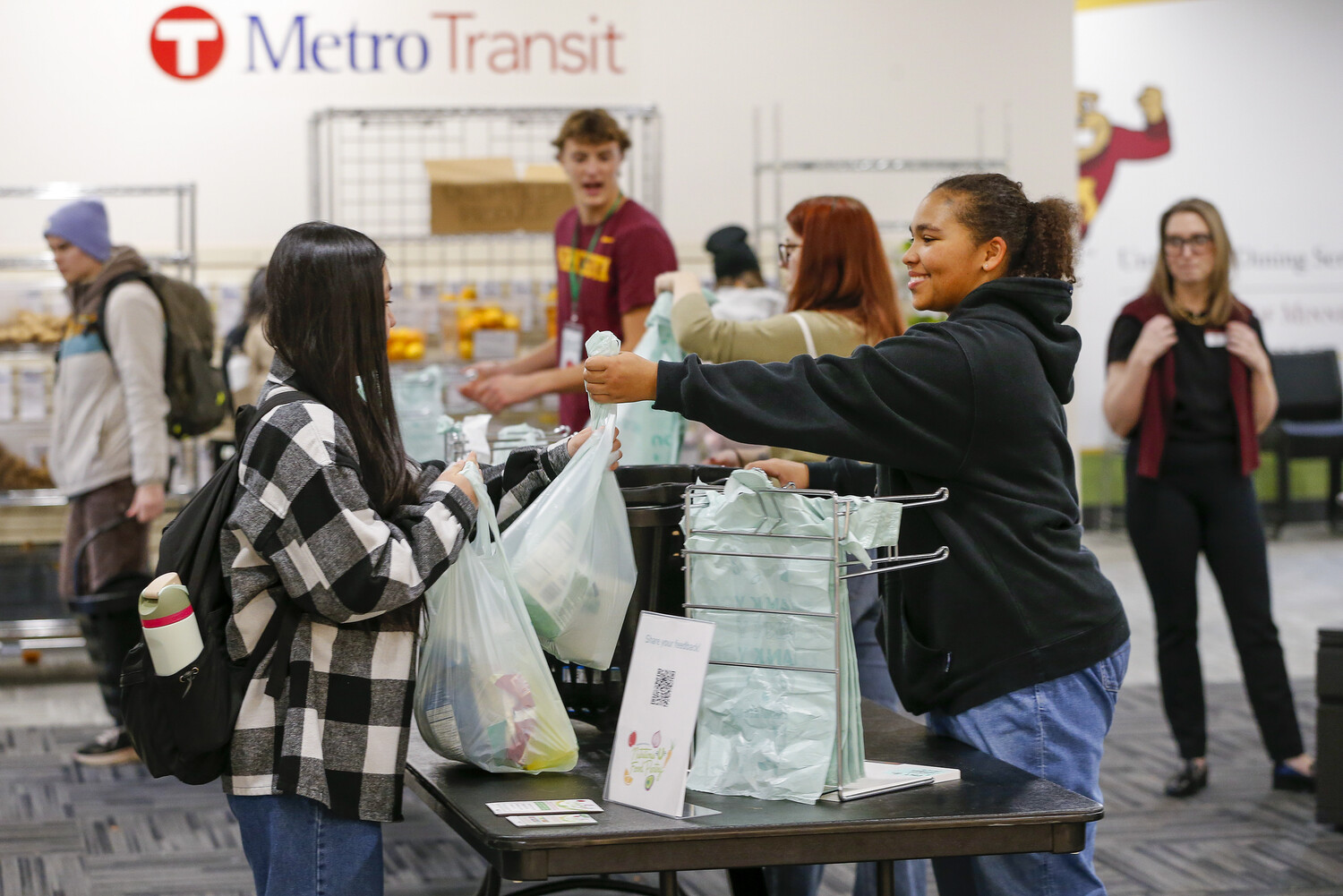
Boynton Health operates three Nutritious U Food Pantry locations: one in Coffman Memorial Union, one in the St. Paul Student Center, and one in the West Bank Skyway building. Students can visit a pantry once per week. These pantries don’t just provide packaged food: They offer fresh produce; culturally appropriate food, such as fish sauce, tofu, and halal meat; and essentials like soap and detergent.
Need has been growing. In the fall semester, U of M students visited a pantry 10,251 times—a 62 percent increase over fall 2024. In the entirety of last year, students visited a pantry 13,400 times. On a monthly basis, visits have gone from 1,800 to 2,900 year over year.
“We’ve responded by adding two days to our pantry calendar and being open one additional hour,” says Michelle Trumpy (M.P.H. ’06), director of public health for Boynton Health. “That may not seem like a lot, but from early November through December we added capacity to handle more visits.”
Boynton collaborates with several community partners, such as Keystone Community Services, Kitchen Coalition, and Swipe Out Hunger, to contribute to the effort. “This is a very large operation at this point,” Trumpy says. “We accept thousands of pounds of food, like 10,000 pounds of food on a dock on a Monday, and we need to get it to where it needs to go.”
Whenever energy flags, Trumpy and her team remember the stories of the students who visit pantries. “We may have a student whose car breaks down or is in between jobs, or has a paycheck delayed for some reason,” she says. “That student needs us to get through to the next thing.”
Hunger can lead to missed class hours and reduced grade point averages. Or worse. It can be a gateway to emotional problems such as depression and anxiety.
Food insecurity hits students from historically marginalized communities harder: 75 percent of pantry student visitors are Black, Indigenous, or people of color. Many rely on Supplemental Nutrition Assistance Program (SNAP) benefits, which got drastically reduced in November by the federal government. In response the University began offering one free meal to affected students in a residential dining hall until SNAP benefits resume. Trumpy says Boynton is doing its best to meet the moment, including bringing in new partners.
“We’re working on a partnership with Second Harvest Heartland for sourcing our food in collaboration with the University of Minnesota Foundation,” she says. “Because of their scale, they are able to offer food at a lower cost. We’re excited about that.”
Nutritious U Food Pantry program has come a long way from its early days in 2017. It’s had to.
“Students appreciate what we’re doing and we’re here for them,” Trumpy says.
If you liked these stories, Minnesota Alumni magazine publishes four times a year highlighting U of M alumni and University activities. Early access to stories and a print subscription are benefits of being an Alumni Association member. Join here to receive a printed copy at home.